Architecture → Datasheets
Datasheets.
Single-page engineering references for deploying Senua AI on real hardware. Each sheet states its assumptions, shows its numbers, and links the validation note that produced them.
DS-001 · 14 Aug 2026
UAV companion power: shared flight pack vs separate cell
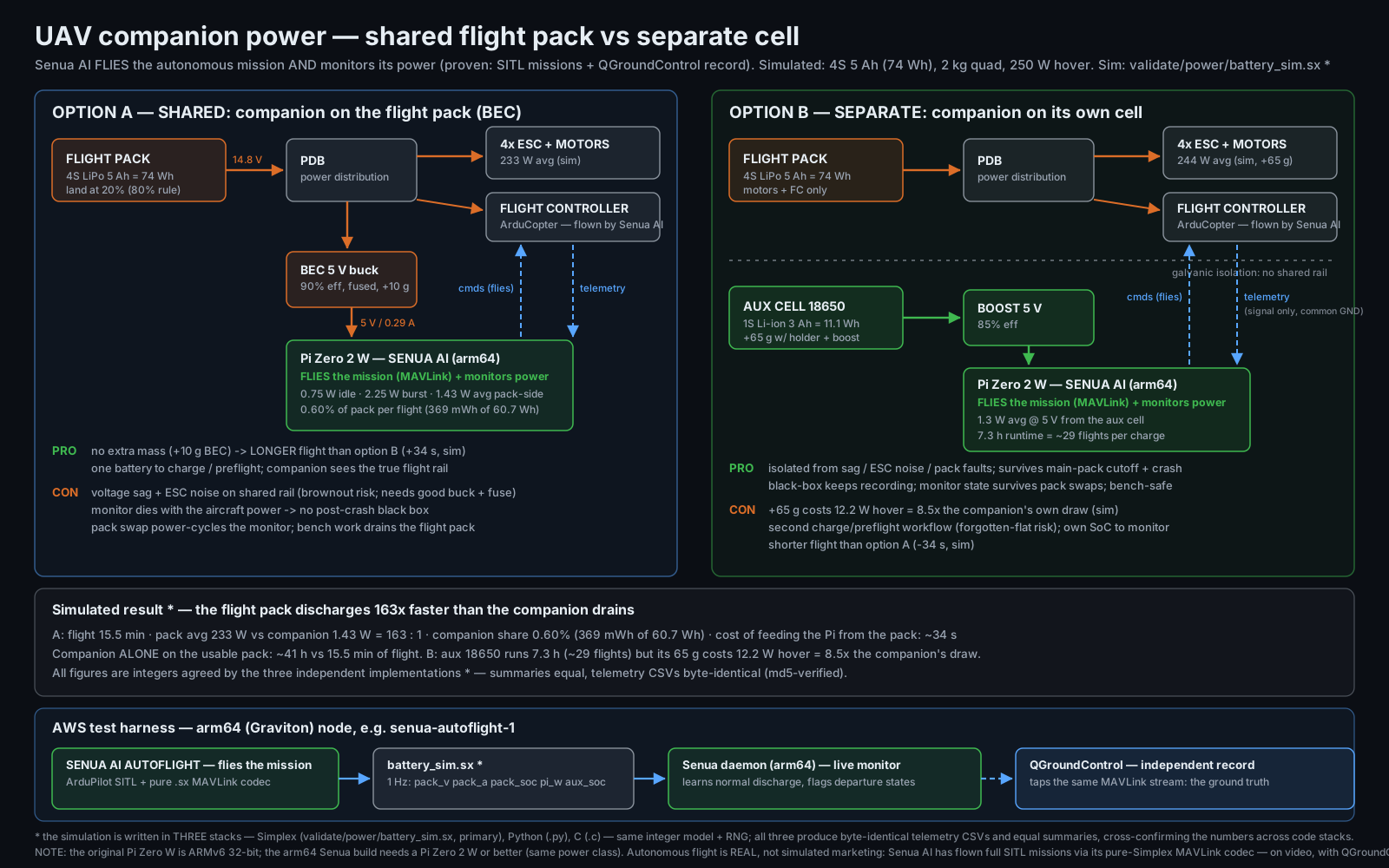
Senua AI flies the autonomous mission and monitors the aircraft from the same on-board companion board (Raspberry Pi Zero 2 W class): autonomous flight already proven in full SITL missions, recorded in QGroundControl. This sheet answers the deployment question that follows: should that companion draw from the drone’s flight battery through a BEC, or carry its own cell? Both architectures are diagrammed with pros, cons, and simulated discharge.
Headline numbers: the flight pack discharges 163x faster than the companion drains it: the companion costs 0.6% of the pack per flight, and would run ~41 hours alone on energy the airframe empties in ~15 minutes. The counter-intuitive finding: the separate cell is the option that costs flight time: its 65 g costs 8.5x more hover power than the companion itself draws.
Download the datasheet (PDF) View as SVG See the validation note
Deploying on your own hardware?
Tell us the airframe, the board, and the mission: we’ll show you the envelope.
Request access